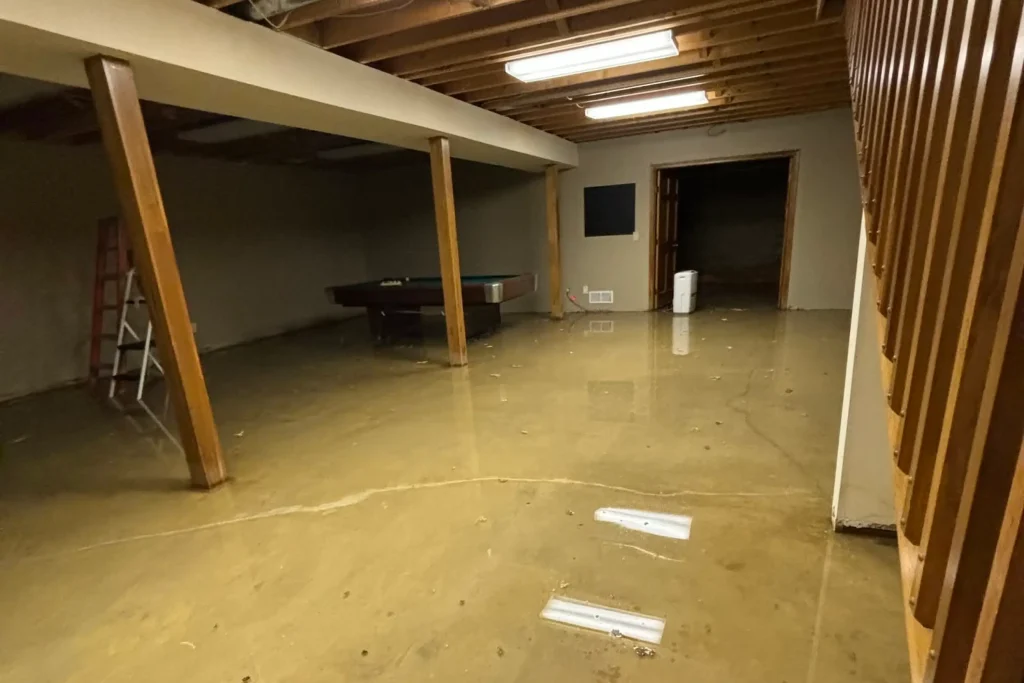
Finding water in your basement is stressful. Your mind immediately jumps to expensive repairs, foundation problems, or the possibility of mold. The truth is that a leaking basement doesn’t always mean there’s a major structural issue. In many cases, the water is simply finding the easiest path into your home. The challenge is figuring out where that path starts.
One thing we tell homeowners all the time is this:
The place where you see water isn’t always where the water is getting in.
That’s why guessing rarely works. Before anyone can recommend the right repair, you need to understand what’s causing the leak.
In this guide, we’ll walk through the most common reasons basements leak, what we typically find during inspections in Central Ohio, and what you can do before deciding on a repair. If you’ve already discovered water and aren’t sure what to do first, start with our guide Water in Your Basement: What to Do Next.
Before You Look for a Solution, Find the Source
It’s tempting to focus on removing the water from your basement floor. Instead, ask yourself a few questions:
- Does the water only happen after heavy rain?
- Is the water coming through the wall or up through the floor?
- Is it always in the same spot?
- Do you notice musty odors even when the basement looks dry?
- Have you seen cracks in the walls or floor?
These clues tell us far more than the amount of water on the floor. When we inspect a basement, we’re looking for patterns. Water almost always leaves evidence long before it becomes a major problem.
The Most Common Reasons Basements Leak
Hydrostatic Pressure
This is one of the biggest causes of basement leaks, and it’s also one of the least understood. After several days of rain, the soil around your home becomes saturated. As more water collects in the ground, pressure builds against your foundation. Eventually, that pressure pushes water through tiny openings, construction joints, or small cracks.
Many homeowners assume their foundation suddenly failed. Most of the time, that’s not what happened, and the foundation is simply under more water pressure than it can naturally resist.
Foundation Cracks
Concrete naturally develops small cracks over time. Some are cosmetic. Others allow water inside. What you need to know is whether that crack is letting moisture into your basement.
One thing we see fairly often is homeowners sealing the inside of a crack without addressing why it’s leaking in the first place.
If you’re also noticing bowing walls, uneven floors, or widening cracks, the issue could involve foundation movement instead of simple water intrusion. That usually means your basement is due for some foundation repair services.
Poor Drainage Around Your Home
Sometimes your yard is the source of basement leaks. Clogged gutters, short downspouts, negative grading, and landscaping that traps water near the house all increase the amount of water surrounding the foundation. We’ve inspected homes where correcting drainage outside dramatically reduced basement moisture without major repairs.
Before assuming you need waterproofing, check for blockages in the following:
- Gutters
- Downspouts
- Splash blocks
- Yard grading
- Areas where water pools after storms
FEMA recommends directing water away from the foundation as one of the simplest ways homeowners can reduce water intrusion.
Window Wells
Basement windows are another common place for water entry. Window wells fill with leaves surprisingly fast, and if the drain becomes clogged, water has nowhere to go except into the basement. This is one of the easiest problems to prevent with routine maintenance.
Plumbing Leaks
Not every wet basement is caused by rain. We’ve visited homes where homeowners assumed they needed waterproofing only to discover a leaking pipe, water heater, or HVAC drain line. If the area is wet regardless of the weather, don’t rule out an interior plumbing issue.
What We See Most Often in Central Ohio
In Central Ohio, many homes are built on clay-heavy soils. Unlike sandy soils that drain quickly, clay holds water against the foundation after heavy rain. That’s why we often hear homeowners say:
“It only leaks after a really big storm.”
That doesn’t necessarily mean the problem is getting worse. It usually means enough groundwater has finally built up to force water through the weakest point.
Because we see these conditions every day, we can recommend repairs based on how homes in our area actually behave, not just generic waterproofing advice. If the problem keeps coming back, it’s usually time to look at a permanent waterproofing solution instead of another temporary fix.
Can I Fix the Leak Myself?
Sometimes, yes by:
- Cleaning gutters.
- Extending downspouts.
- Removing debris from window wells.
- Improving grading.
These are all worthwhile homeowner projects that rarely solve groundwater problems.
For a leaky wall, you may have sealed it with waterproof paint. The problem is that this only treats the surface. It doesn’t relieve the pressure outside your foundation. Before buying waterproof paint, it’s best to know what those products can realistically accomplish.
If moisture has been present for more than a day or two, the EPA recommends drying affected materials quickly to reduce the chance of mold growth.
When Should You Call a Professional?
Not every damp basement requires immediate repairs. While some do, we recommend scheduling an inspection if you notice:
- Water after every heavy rain
- The same leak returning over and over
- Standing water on the basement floor
- Musty odors that don’t go away, even when it’s dry
- Mold or mildew
- Cracks that appear to be getting larger
The sooner you identify the cause, the easier and less expensive the repair usually becomes.
Don’t Pay to Fix the Wrong Problem
The biggest mistake homeowners make is addressing the wrong problem. For example:
- A leaking crack may actually be caused by hydrostatic pressure.
- A damp wall might really be a drainage problem.
- A musty basement could be hiding moisture you can’t even see yet.
That’s why every inspection at US Basement Repair starts with one goal: to find the source before recommending any solutions.
Once we understand why your basement is leaking, we can recommend the repair that actually fixes your water problems. Contact us for your free quote today.
And if you’re already thinking about waterproofing, our Basement Waterproofing Cost Guide explains what affects pricing and why estimates can vary so much.
Frequently Asked Questions
Why does my basement only leak after heavy rain?
Heavy rain saturates the soil around your foundation, increasing hydrostatic pressure. Once enough pressure builds, water can enter through cracks, joints, or other weak points.
Is a leaking basement always a foundation problem?
No. Basement leaks are often caused by poor drainage, clogged gutters, window wells, plumbing leaks, or groundwater pressure. An inspection helps determine the actual cause before repairs are recommended.
Can waterproof paint stop basement leaks?
Usually not. Waterproof paint can help with minor moisture issues, but it doesn’t stop groundwater or relieve pressure outside the foundation. (Internal Link for later: Basement Waterproofing Paint: Does It Work?)
Can a small basement leak turn into a bigger problem?
Yes. Even occasional leaks can damage drywall, flooring, insulation, and stored belongings over time. Persistent moisture can also create conditions where mold begins to grow. (External Link: EPA Mold and Moisture Guide)
What’s the next step if my basement keeps leaking?
The next step is finding out why it’s leaking. Once the source is identified, you can compare repair options and costs with confidence. If you’re considering waterproofing, our Basement Waterproofing Cost Guide explains what influences pricing.