If you’ve started looking into crawl space encapsulation, there’s a good chance you’ve already noticed something you don’t like under your house. Perhaps your crawl space smells musty, you’ve found damp insulation, or the floor above it feels cold. You may have seen standing water, mold, or a vapor barrier that’s actually dirt.
Then comes the big question, how much is it going to cost to fix my crawl space?
Crawl space encapsulation prices can vary quite a bit because the condition of the space matters just as much as its size. A clean, dry crawl space that mainly needs a properly sealed vapor barrier is a much different project from one with standing water, damaged insulation, wood rot, or drainage problems.
That’s why a good estimate starts with looking at what’s already happening underneath the home. If you’re still learning what encapsulation involves, you can start with our Crawl Space Encapsulation Service page.
What Are You Actually Paying For?
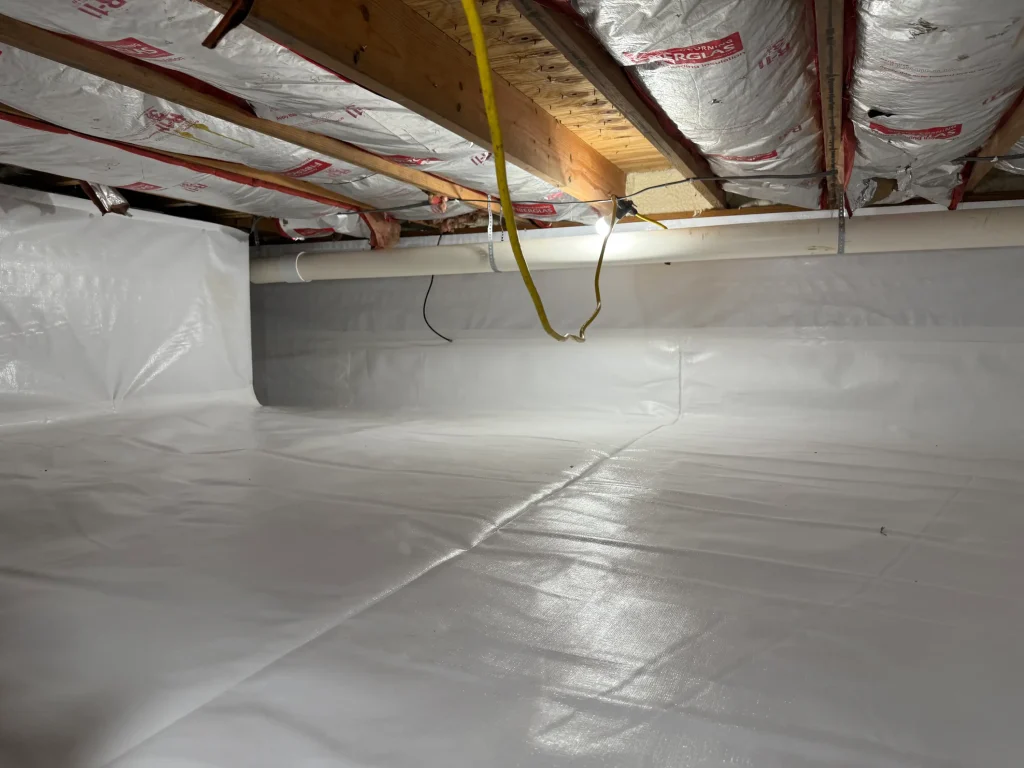
Encapsulation usually involves sealing the crawl space from ground moisture and outside air so the environment beneath the home stays drier and more controlled.
Depending on the home, your crawl space may need:
- Removing old vapor barrier material
- Cleaning debris from it
- Installing a heavy-duty ground liner
- Sealing the liner around walls and piers
- Closing or sealing vents
- Addressing water entry
- Removing damaged insulation
- Adding new insulation
- Installing drainage
- Adding a sump pump
- Installing a dehumidifier
- Treating mold or damaged wood when needed
There’s a lot here, but you get the picture on why this type of work depends. That’s also why online cost calculators only get you so far. The crawl space must be looked at as a system.
Crawl Space Size Matters, but It’s Only One Part of an Estimate
Square footage naturally affects material and labor. A larger crawl space requires more liner, more sealing, and more time.
Access to the space can change the estimate too. Some crawl spaces are relatively open and easy to move through. Others have tight sections, low clearance, multiple piers, ductwork, plumbing, and other obstacles that make installation much more time-consuming.
We’ve been in spaces where just getting materials from one side of the home to the other took some thoughtful planning.
Those details aren’t always obvious until work under your house needs to get done.
Existing Water Problems Can Increase the Scope
Before encapsulating a crawl space, we want to know what happens during wet weather. We’ll need answers to:
- Is there standing water?
- Does water enter along a foundation wall?
- Are there low areas where moisture collects?
- Does the soil stay wet for long periods?
Putting a new liner over an active water problem won’t give you the result you’re looking for. In fact, drainage improvements, a sump system, or other water-management work may need to happen first. It’s also worth checking gutters, downspouts, and grading outside the home because water that’s being dumped next to the foundation has a habit of finding its way into crawl spaces.
Old Insulation Can Increase the Cost
A lot of crawl spaces we inspect still have fiberglass insulation between the floor joists. Once that insulation gets damp, it can sag, hold moisture, collect dirt, and become a pretty unpleasant part of the crawl space. Therefore, removing it takes time and resources
This is also why it’s useful to look at the crawl space before deciding that encapsulation is simply a liner installation.
Do You Need a Dehumidifier?
Some crawl spaces benefit from a dehumidifier after encapsulation. The goal is to keep humidity at a more consistent level once outside moisture has been reduced. Whether you need one depends on the crawl space, the home, and how humidity behaves throughout the year.
In Central Ohio, summer humidity and wet soil conditions can make crawl spaces particularly damp. If the space already has a musty smell or you’ve noticed condensation on ductwork, humidity should be part of the conversation during the inspection.
The EPA recommends controlling indoor moisture as a key part of reducing mold growth.
What We Commonly Find When Estimating Central Ohio Crawl Spaces
A lot of crawl space issues don’t get much attention until a homeowner needs to go under the house for something else. That’s when they find wet insulation, a torn plastic sheet, standing water, or signs that moisture has been there for a long time.
Central Ohio homes also deal with soil that can hold a lot of water after extended rain. And if that moisture is evaporating directly from exposed soil underneath the house, the crawl space can stay damp even when it’s completely dry outside.
Over time, you may notice that moisture upstairs through musty odors, uncomfortable floors, or higher humidity.
Encapsulation is designed to protect your home and to create a cleaner separation between ground moisture and the home.
How Should You Compare Crawl Space Estimates?
Start by comparing the scope of work. Two proposals can have very different prices because they may be recommending very different projects. Ask each contractor:
- What material are you installing?
- How will the liner be attached and sealed?
- Are the walls and piers included?
- Is old material being removed?
- Does the crawl space need drainage?
- Is insulation included?
- Are vents being sealed?
- Is a dehumidifier recommended?
- What happens if water enters after the work is complete?
- What warranty is included?
You should understand what you’re buying before looking at the final number. A lower estimate may cover everything your crawl space needs. It may also leave several parts of the project scope out.
For US Basement Repair, our estimates can range from $3,100 for simpler fixes to $35k+ for more complex repairs.
Is Crawl Space Encapsulation Worth the Cost?
For homeowners dealing with persistent crawl space moisture, encapsulation can make a noticeable difference in how the space performs. A properly sealed crawl space can help reduce ground moisture, protect insulation and wood components, and make the area beneath the house much cleaner to work in. It can also help with musty odors that work their way into the living space.
We’d recommend starting with the condition of your crawl space rather than deciding based on a generic price online.
Get an Estimate Based on Your Crawl Space
Crawl spaces are easy to ignore because most homeowners don’t spend much time down there. Unfortunately, moisture doesn’t need much attention from us to cause problems.
At US Basement Repair, we look at the whole crawl space before recommending encapsulation. We’ll check moisture conditions, drainage, insulation, access, and any signs of damage so you know what actually needs to be done.
If you’d like to see what crawl space services are available for your home, visit our Crawl Space Encapsulation page.
And if the crawl space is holding standing water or you’re seeing foundation movement, it may also make sense to have those conditions evaluated through our foundation repair services before the encapsulation work begins.
Frequently Asked Questions
How much does crawl space encapsulation cost?
The cost depends on the size and condition of the crawl space, the materials being installed, access, existing water problems, insulation, drainage, and whether equipment such as a sump pump or dehumidifier is needed. For us, costs range from $3,100 to $35,000+ for each crawl space.
Does every crawl space need a dehumidifier after encapsulation?
No. Some spaces stay within a healthy humidity range once they’re properly sealed, while others benefit from a dehumidifier. The best approach depends on moisture levels and how the crawl space behaves throughout the year.
Can you encapsulate a crawl space that has standing water?
The water problem should be addressed as part of the project. Drainage improvements or a sump system may be needed so water isn’t collecting underneath the new liner.
Does old crawl space insulation need to be removed?
It depends on its condition. Wet, sagging, moldy, or heavily contaminated insulation is often removed before encapsulation. Insulation that’s dry and in good shape may be handled differently.
How long does crawl space encapsulation last?
A quality encapsulation system can last for many years when it’s properly installed and protected from damage. Material quality, drainage, installation, and ongoing moisture conditions all affect how well the system performs over time.