
If you’ve got a damp basement wall, waterproofing paint might sound like the right answer. You can easily roll it onto concrete or block walls and have the whole project done in a day. Compared with installing a drainage system or repairing a foundation crack, there’s a reason why many homeowners try waterproofing paint first.
However, the bigger question is whether the moisture you’re seeing is actually being addressed by the paint.
Basement waterproofing paint works best when you understand the types of applications it’s useful for. So, if you’ve already got water collecting on the basement floor, wall staining that returns after storms, or paint that keeps bubbling and peeling, there probably more going on behind the surface.
And if you’re still trying to figure out where the moisture is coming from, our guide on Why Is My Basement Leaking? is a good place to start!
What Does Basement Waterproofing Paint Actually Do?
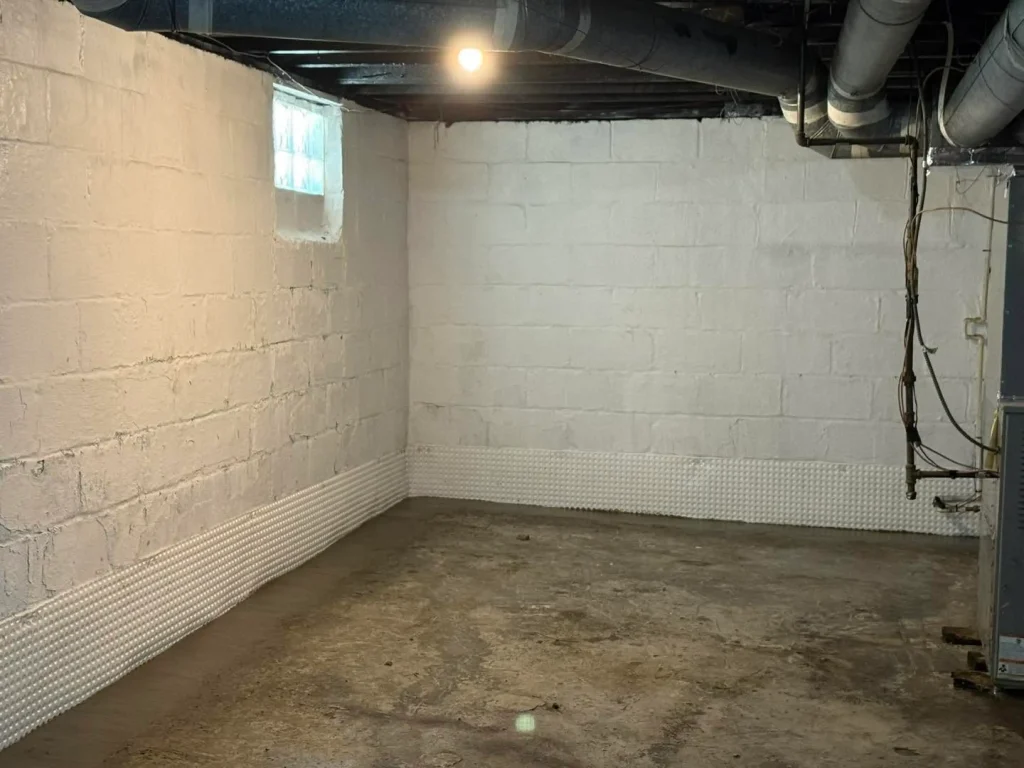
Most basement waterproofing paints are thicker than standard wall paint and are designed for concrete, masonry, or block walls. They’re commonly used to help reduce minor moisture penetration through porous surfaces. They can also clean up the appearance of an unfinished basement and make concrete walls easier to maintain.
For a basement that feels a little damp or has occasional surface moisture, a masonry coating may be useful. However, the condition of the wall matters quite a bit. Paint tends to perform better on a clean, sound surface without active leaking, loose material, or heavy mineral buildup.
If water is physically moving through a crack, collecting where the wall meets the floor, or appearing after every major storm, you’ll want to understand the source before putting another coating over it.
Why Does Waterproofing Paint Sometimes Peel or Bubble?
Paint problems can give you some useful clues about what’s happening in the wall. You may notice:
- Bubbling paint
- Peeling or flaking coatings
- White powdery deposits
- Dark moisture stains
- Damp spots that return after rain
- Areas where the wall feels cool or wet
White, chalky material on masonry is called efflorescence and forms when moisture moves through concrete or block and leaves mineral deposits behind once the water evaporates.
Therefore, if you clean a wall, repaint it, and the above signs return, chances are moisture is still making its way through the foundation. That’s definitely worth paying attention to before a small moisture problem becomes a bigger, costly foundation problem later.
Pay Attention to When the Moisture Shows Up
One of the easiest things a homeowner can do is to be observant:
- Does the wall get damp after several days of rain?
- Does water show up during one particular type of storm?
- Is the basement damp throughout the year?
- Does the problem stay in one area?
Jot these details down because it will help a basement repair specialist to narrow things down.
Here in Central Ohio, we often see basement moisture become more noticeable after the ground has been saturated for a while (after heavy rain). Our clay-heavy soils can hold a lot of water around the foundation, especially if your drainage isn’t working.
As that moisture builds, it can create pressure against basement walls and beneath the floor. That pressure is known as hydrostatic pressure.
A coating on the inside wall may still look fine for a while, but recurring groundwater pressure usually needs a more complete drainage or waterproofing solution. Only then can waterproofing paint be used.
Check Outside Before You Buy More Paint
It’s always worth taking a walk around the house. We’ve seen plenty of basement moisture problems made worse by simple drainage issues outside.
Look at your:
- Gutters
- Downspouts
- Grading
- Window wells
- Low spots near the foundation
- Landscaping that holds water against the house
Downspouts should move roof water away from the foundation, and the ground around the home should encourage water to flow away rather than collect next to the basement wall. Think of sloping water away from your foundation.
FEMA includes proper drainage and directing water away from the home among the steps homeowners can take to reduce flood and water damage.
If those basics need attention, address them before cover up your basement walls with another coat of paint.
When Waterproofing Paint Can Be a Reasonable DIY Project
There are situations where waterproofing paint makes sense. A homeowner may use it to improve unfinished concrete walls, help manage light surface dampness, or freshen up an older basement after the underlying moisture issue has already been corrected.
Preparation matters. The wall generally needs to be clean, dry, and free from loose paint, dirt, or heavy mineral deposits. Any active leaks or obvious cracks should be addressed before coating the surface.
Follow the manufacturer’s directions carefully since masonry coatings can vary in how they’re applied and what surfaces they’re meant for. And give yourself some time to watch the basement afterward.
If the moisture comes back, you’ve learned something useful. There’s probably another source that needs attention and it might be time to call in a professional.
What If Water Is Visibly Coming Through the Wall?
You may see a wet crack after heavy rain, water around the bottom of a block wall, or a damp line running along the joint where the wall meets the basement floor.
At this point, painting is no longer an option, and it’s worth having the basement evaluated. A professional waterproofing system might include an interior drainage channel, sump pump, crack repair, wall system, or another solution based on how the water is entering to redirect water away from your basement.
And if you’re wondering what a larger repair might involve financially, our Basement Waterproofing Cost Guide explains what goes into an estimate.
Don’t Ignore Musty Smells or Hidden MoistureDon’t Ignore Musty Smells or Hidden Moisture
You may notice a musty smell, damp cardboard boxes, condensation, or discoloration near the bottom of finished walls.
The EPA recommends controlling moisture and drying wet materials quickly because moisture is a major factor in mold growth. And mold can cause damage to your home and sickness to your family.
If you’re seeing repeated dampness behind finished materials, it’s worth finding the cause before repainting or covering the area again.
So, Is Basement Waterproofing Paint Worth Trying?
For minor surface moisture and unfinished masonry, it can be. Just make sure the wall is telling you a surface-level story.
But if you’ve got recurring leaks, water after storms, staining that keeps returning, or moisture coming from the wall-floor joint, your basement will need a closer look.
We’d rather help homeowners figure out what’s happening and fix the root problem before they spend time coating the same wall every year only to face a much bigger repair later.
At US Basement Repair, we start by looking at where the water is coming from, what’s happening outside the foundation, and how moisture is moving through the basement. From there, we can guide you through the options that works for your home. Contact us today for a free consultation.
If you’ve recently found water and you’re still at the beginning of that process, our Water in Basement: What to Do Next guide walks through the first steps.
Frequently Asked Questions
Can waterproofing paint stop a leaking basement wall?
It can help with minor surface moisture, but not for active leaks. Water coming through cracks, joints, or areas under groundwater pressure should be evaluated so the source can be addressed.
Can I paint over efflorescence?
It’s better to clean the mineral deposits first and figure out why moisture is moving through the wall. Painting directly over recurring efflorescence often leads to peeling or bubbling later.
Does waterproofing paint work on concrete block walls?
Many masonry waterproofing products are made for concrete and block. The wall should be properly prepared, and any active leaks or damaged mortar should be handled first.
Why does my basement paint keep peeling after it rains?
Recurring peeling after storms is often a clue that moisture is moving through the foundation wall. The timing of the problem can help determine whether groundwater or exterior drainage is involved.
When should I call a basement waterproofing contractor?
It’s a good idea to have the basement inspected when you’re seeing recurring leaks, standing water, moisture along the wall-floor joint, growing cracks, mold, or dampness that keeps returning after repairs.